

Article contributed by Agnes Yohannan, Research Officer, MSc Audiology
You may have experienced a beeping or buzzing sound in your ear at least once in your lifetime, and it could be nothing to worry about. But what if the sound you are hearing becomes persistent and increases in its occurrence, becoming permanent? This can be the case in people who are facing “Tinnitus”.
Tinnitus is a condition in which there is a presence of sound in your ear, even when there is no other external sound. The prolonged presence of such a sound in the ears can be annoying and irritating for those affected.
Among adults, the collective prevalence rate for tinnitus is around 14.4 %1. These numbers show that tinnitus is not a rare condition and affects many people’s lives.
What Causes Tinnitus?
Tinnitus can be caused by factors such as continuous exposure to loud sounds, ear-related disorders, dental and jaw-related issues, and cardiovascular problems. Though it’s not always clear what causes tinnitus, it can often be linked to some form of hearing loss.
What Should I Do if I Have Tinnitus?
If you have been experiencing tinnitus for some time and are not sure what to do, here are some suggestions:
- First and foremost, try to stay calm. Panicking over the tinnitus can make it worse.
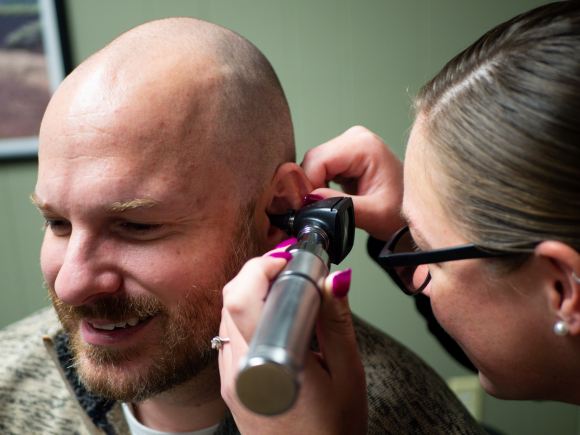
- Since tinnitus may be related to ear-related disorders, get your hearing checked by a hearing healthcare professional.
- If you suspect any other medical conditions, make sure to get checked by your physician.
- If you have an underlying medical condition such as an ear infection, vascular issues, or cervical problems, be sure to take any medications prescribed by your doctor.
If tinnitus is affecting your daily life—your sleep and your work—it should be addressed. Tinnitus itself sometimes doesn’t create any issues, but secondary problems such as sleeplessness, emotional well-being, and mental health may be affected.
How Can I Treat My Tinnitus?
Though tinnitus cannot currently be cured, there are ways to manage it. Some recommendations include:
- Address your hearing loss: If you have hearing loss, take the recommended management options such as hearing aids, which can also be helpful for reducing the impact of tinnitus.
- Try a tinnitus-masking device: This will not only be helpful in masking your tinnitus, but it can also help you feel some relief. The type of tinnitus-masking sounds can be acoustically modified sounds recommended by a tinnitus specialist, based on your tinnitus characteristics.
- Consider sound therapy: Specialized sound therapy sessions are recommended for people with tinnitus, under the supervision of a hearing health professional.
- Change negative patterns: Further psychological treatments like Cognitive Behavioral Therapy (CBT) can help you to change your negative thoughts and emotions associated with tinnitus.
Don’t Go for the Quick Fixes!
Scientists and researchers are working to discover medical management for tinnitus. There are plenty of management strategies but remember there is currently no direct medical cure. It’s always best to go through the scientific evidence and make sure to double-check the credibility of any information you receive.
Beware of miracle quick fixes; always choose evidence-based management.
You Are Not Alone

If you are experiencing tinnitus, remember you are not alone. One of the hardest things for people who are suffering from tinnitus is often that other people can’t understand their problem.
Since tinnitus is an invisible condition, it’s easy for other people to judge and state that it’s nothing. Just like an iceberg, what others see outside is just the tip. Only you know how much is submerged beneath the surface.
In this world of too much information, it is often difficult to find out the right information. Healthcare professionals including hearing therapists, tinnitus therapists and audiologists will understand your condition and can guide you along the right path.
Living with Tinnitus can be tough at times but remember that there are ways to help control and manage it. Further support can be found at Tinnitus UK and the American Tinnitus Association.
References
1.(Jarach et al., 2022b) Jarach, C. M., Lugo, A., Scala, M., Van Den Brandt, P. A., Cederroth, C. R., Odone, A., Garavello, W., Schlee, W., Langguth, B., & Gallus, S. (2022b). Global Prevalence and Incidence of Tinnitus. JAMA Neurology, 79(9), 888. https://doi.org/10.1001/jamane
 Sudden Hearing Loss Support